Analysis by Mark R. · Reviewed 2026-07-05 · 9 min read
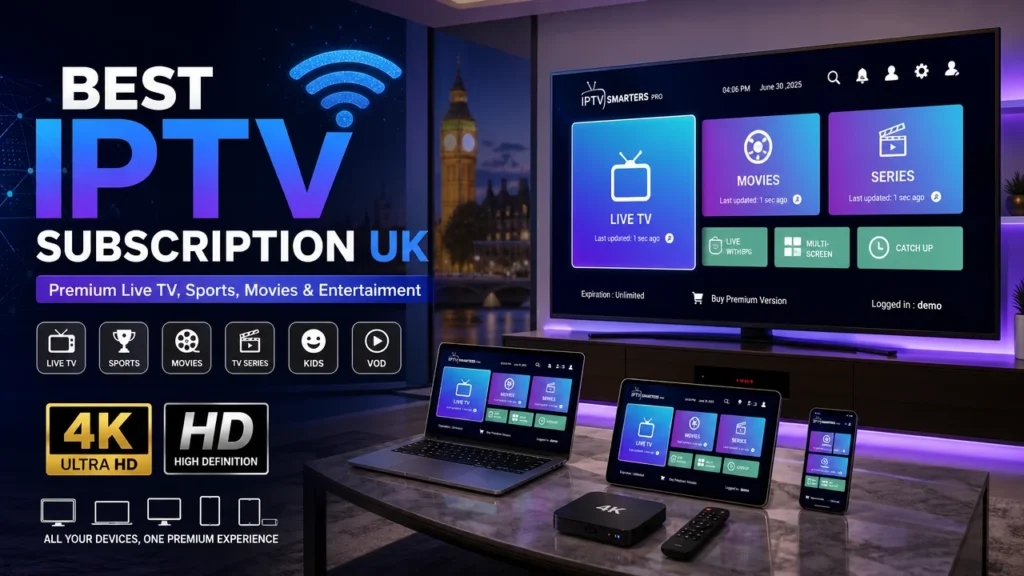
If you've ever wondered what is IPTV TV and whether it can replace your expensive cable bill, you're not alone. Millions of viewers are switching to Internet Protocol Television every year, drawn by lower costs, wider channel selections, and the ability to watch on almost any device.
IPTV stands for Internet Protocol Television. Instead of receiving TV signals through traditional cable lines, satellite dishes, or over-the-air antennas, IPTV delivers television content through your internet connection. Think of it like streaming Netflix, but for live TV channels from around the world.
In this complete guide, we'll explain exactly how does IPTV work, what you need to get started, the honest pros and cons, and whether an IPTV subscription might be right for your household. We'll also compare IPTV vs cable TV so you can make an informed decision, and answer the most common questions people search for on Reddit and elsewhere.
What Is IPTV TV Exactly?
At its core, IPTV is a system where television services are delivered using the internet protocol suite over a packet-switched network like the internet. Instead of broadcasting all channels simultaneously (the traditional method), IPTV sends only the channel you request, when you request it.
There are three main types of IPTV services you'll encounter:
- Live Television — Real-time streaming of TV channels as they broadcast. This is the closest experience to traditional cable TV.
- Time-Shifted Media — Think catch-up TV. Missed last night's episode? Rewind and watch it now.
- Video on Demand (VOD) — A library of movies and shows available anytime, similar to Netflix or Amazon Prime.
Many legal IPTV providers combine all three in a single subscription. The key difference from services like Netflix is that IPTV focuses heavily on live television, often including hundreds of IPTV channels list USA packages alongside international options.
How Does IPTV Work? Step-by-Step
Related Reading: Synaptigen Reviews: Which Option Actually Works Best?
Understanding how does IPTV work helps you appreciate why it's different from traditional TV. Here's the technical process broken down simply:
- Content Acquisition — The IPTV provider receives live TV signals from broadcasters or satellite feeds at their data center.
- Encoding and Compression — Video signals are converted into digital packets using codecs like H.264 or H.265 to reduce file size while maintaining quality.
- Streaming Server Distribution — The compressed data is stored on servers connected to high-bandwidth internet lines.
- Your Request — When you select a channel, your device sends a request to the server, which streams only that specific channel to you.
- Decoding and Playback — Your IPTV app or set-top box decompresses the data and displays it on your screen in real time.
Unlike cable TV where every channel is constantly being sent down the wire regardless of what you're watching, IPTV uses unicast streaming — a direct, one-to-one connection between the server and your device. This makes it far more efficient for the network.
Concrete Benefits for Users
Why are people migrating from traditional TV to IPTV? Here are the real, practical advantages users report:
Cost Savings
IPTV subscriptions typically cost between $10 and $30 per month, compared to $100-$200 for cable. You're paying for the channels you actually watch, not bundles of unwanted networks.
Device Flexibility
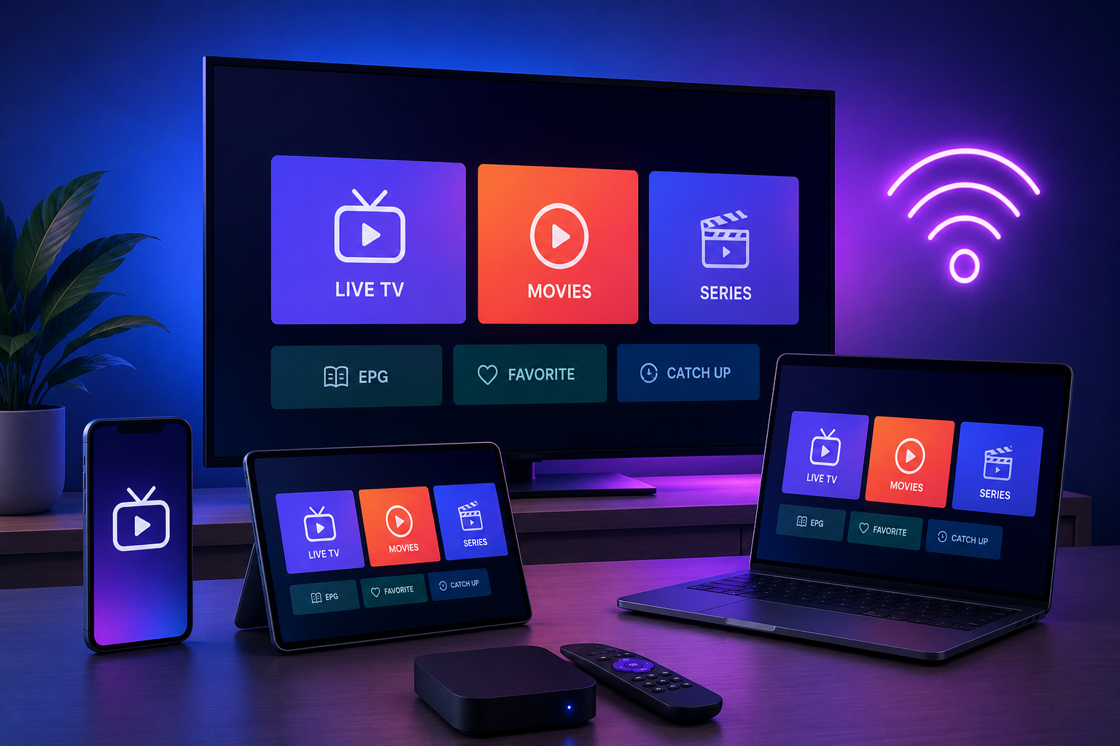
With IPTV, you're not tied to a single TV. Watch on your smart TV, phone, tablet, laptop, or best IPTV service for Firestick setups work exceptionally well. Many providers allow multiple simultaneous connections.
Global Channel Access
Most IPTV services offer channels from dozens of countries. Whether you want BBC, CNN, Indian entertainment, Arabic news, or European sports, an IPTV channels list USA often includes international packages too.
No Long-Term Contracts
Most IPTV services operate on a monthly subscription basis. You can cancel anytime without early termination fees.
Honest Limitations You Should Know
Related Reading: What Is IPTV TV? Honest Review After Testing Live Services
IPTV isn't perfect. Here are the genuine drawbacks every potential user should consider before purchasing any subscription:
Pros
- Significantly cheaper than cable TV
- Watch on multiple devices simultaneously
- Thousands of channels from around the world
- No contracts or hidden fees
- Often includes Video on Demand libraries
- Electronic Program Guide (EPG) for scheduling
Cons
- Requires stable high-speed internet (25+ Mbps)
- Buffering can occur during peak hours
- Some providers operate in legal gray areas
- Channel reliability varies by provider
- Setup requires some technical know-how
- Customer support quality is inconsistent
Internet reliability is the biggest factor. If your connection drops frequently or is below 25 Mbps, IPTV will buffer and frustrate. Also, unlike cable TV which works during power outages (powered by your TV), IPTV requires your internet to be operational.
IPTV vs Cable TV: Which Is Better?
To help you decide, here's a direct comparison of the most important factors when choosing between IPTV vs cable TV:
| Feature | IPTV | Cable TV |
|---|---|---|
| Monthly Cost | $10 – $30 | $80 – $200 |
| Channel Count | 1,000 – 20,000+ | 100 – 300 |
| Device Compatibility | Smart TV, phone, tablet, PC, Firestick | TV only (requires box) |
| Video Quality | Up to 4K (depends on internet) | Up to 4K (consistent) |
| Reliability | Good (depends on internet) | Excellent |
| Contract Required | No (monthly) | Often 1-2 years |
| International Channels | Excellent selection | Limited add-ons |
For most users, IPTV wins on cost and channel selection. Cable wins on reliability and simplicity. If you have good internet and want to save money, IPTV is the clear choice.
Who Is IPTV For? User Profiles
Related Reading: Best iptv subscription Buffering? 5 Fixes That Actually Work
IPTV isn't for everyone. Here's who typically benefits most:
Cord-cutters: People tired of paying $150+ monthly for cable who already subscribe to Netflix, Hulu, or other streaming services. IPTV fills the gap for live sports and news.
International viewers: Expats and immigrants who want channels from their home country. Traditional cable rarely offers comprehensive international packages at reasonable prices.
Sports enthusiasts: With IPTV, you can access sports packages from multiple countries. Many providers include premium sports channels that would cost extra on cable.
Budget-conscious households: Families looking to reduce monthly expenses without completely losing live TV access find IPTV attractive.
Tech-savvy users: People comfortable installing apps on Firestick or Smart TVs and troubleshooting minor streaming issues will have the best experience.
If you fall into one of these groups, IPTV is likely a good fit for you.
what is iptv tv
Compare retail cost-to-value allocation grids and complete zero-risk hardware warranties.
BUY NOW →How to Get Started: 7 Practical Steps
Ready to try IPTV? Here's exactly how to get up and running:
- Check your internet speed — Run a speed test. You need at least 25 Mbps for smooth HD streaming and 50 Mbps for 4K. Wired connections are better than Wi-Fi.
- Choose your device — The best IPTV service for Firestick is common, but IPTV also works on Android TV boxes, Smart TVs (Samsung, LG, Sony), phones, tablets, and PCs.
- Research providers thoroughly — Read IPTV review Reddit threads, check independent forums, and look for providers with trial periods. Avoid any service that asks for large upfront annual payments.
- Start with a trial — Legitimate providers offer 24-48 hour trials for a few dollars. Test channel stability, EPG accuracy, and buffering during evening hours.
- Install the app — Download the recommended IPTV player for your device (TiviMate, IPTV Smarters, Perfect Player, or the provider's custom app).
- Enter your subscription details — You'll receive a URL, username, and password from your provider. Input these into the IPTV app.
- Configure and enjoy — Set up your favorite channels, adjust video settings, and explore the VOD library if included.
If you're setting up how to set up IPTV on smart TV, the process is similar: find the IPTV app in your TV's app store, install it, and log in with your subscription details.
How to Find a Reliable Provider
Finding a trustworthy IPTV provider is the hardest part. The market is unregulated, and quality varies wildly. Here's what to look for:
Trial availability: Never pay for a full year upfront. Reputable providers offer 24-hour or 48-hour trials.
Payment flexibility: Monthly subscriptions are ideal. If a provider demands 6 or 12 months upfront, walk away.
Channel stability: Ask about uptime guarantees. Good providers maintain 99%+ uptime with regular server maintenance.
Customer support: Test their responsiveness before paying. Send a pre-sales question and see how quickly they reply.
Community reputation: Search for IPTV review Reddit discussions about any provider you're considering. Real user experiences are invaluable.
Legitimate payment methods: Credit card or PayPal offers buyer protection. Be cautious of providers who only accept cryptocurrency or wire transfers.
⚠️ Limited Inventory Notice: Examine structural specifications, direct manufacturing packages, and instant priority shipping paths.
CLAIM SPECIAL OFFER →
Is IPTV Legal?
This is the most important question to understand. IPTV technology itself is completely legal. Major companies like Hulu + Live TV, YouTube TV, and Sling TV use IPTV technology. These are legal IPTV providers because they have proper licensing agreements.
The gray area arises with unlicensed IPTV services that stream copyrighted content without paying broadcasters. These services are popular because they offer thousands of channels for very low prices, but they operate outside the law.
How to tell the difference: Legal IPTV providers have transparent business information, proper payment processing, and clear terms of service. Unlicensed services typically use vague branding, accept only cryptocurrency, and disappear frequently.
Using unlicensed IPTV services may expose you to legal risk depending on your country. In the US and UK, authorities have prosecuted both sellers and users of pirate IPTV services. Always choose a licensed provider when possible.
Factual Clarifications (FAQ)
What internet speed do I need for IPTV?
For standard definition channels, 10 Mbps is sufficient. For HD streaming, you need at least 25 Mbps stable connection. 4K content requires 50 Mbps or higher. Actual speed requirements also depend on how many devices are using your internet simultaneously. A wired Ethernet connection provides more consistent performance than Wi-Fi, especially during peak evening hours.
Can I use IPTV on multiple devices at the same time?
Most IPTV providers allow multiple simultaneous connections, typically 1 to 5 devices depending on your subscription plan. Some providers offer unlimited connections for an additional fee. Check the provider's policy before subscribing, as some may limit connections to a single IP address. If different family members want to watch different channels in different rooms, confirm multi-screen support.
How does IPTV compare to streaming services like Netflix?
IPTV and Netflix serve different needs. Netflix offers a curated library of on-demand movies and shows with original content. IPTV focuses on live television, including news, sports, and international channels. Many users maintain both: Netflix for binge-watching and IPTV for live TV. Some IPTV services also include Video on Demand libraries with movies and shows, but the selection is rarely as comprehensive as dedicated streaming platforms.
Is it worth buying a lifetime IPTV subscription?
Lifetime IPTV subscriptions are generally risky and not recommended. Many "lifetime" providers disappear within months, taking your money with them. IPTV requires ongoing server maintenance, bandwidth costs, and channel licensing fees. A sustainable business model requires recurring revenue. Stick to monthly or quarterly subscriptions. If a provider is legitimate and stable, you can always renew. Never pay more than 3 months upfront for any IPTV service.
What channels do IPTV providers typically offer?
Most providers offer an extensive IPTV channels list USA that includes major networks like ABC, NBC, CBS, FOX, CNN, ESPN, and local affiliates. International packages typically include channels from India (Zee, Star, Sony), UK (BBC, ITV, Sky), Arabic countries (MBC, Al Jazeera), Latin America, and Europe. Premium sports packages often include ESPN+, Sky Sports, DAZN, and beIN Sports. Channel availability varies by provider.
Can I record shows with IPTV?
Many IPTV apps and services offer cloud DVR functionality, allowing you to record live TV and watch later. TiviMate (popular on Firestick and Android TV) supports local recording to USB storage or network drives. Some providers include cloud DVR in their subscriptions, while others charge extra. The recording quality matches the original broadcast. Check if your chosen provider and app supports this feature before subscribing if recording is important to you.
What is the best VPN for IPTV?
A VPN is recommended for IPTV for two reasons: privacy from your ISP and bypassing geo-restrictions. ISPs sometimes throttle IPTV traffic, which a VPN prevents by encrypting your connection. Good VPNs for IPTV include NordVPN, ExpressVPN, and Surfshark, which offer fast servers optimized for streaming. Choose a VPN with multiple server locations and no data caps. Some IPTV providers may prohibit VPN usage, so check their terms first.
How do I fix buffering on IPTV?
Buffering is usually caused by slow internet, network congestion, or overloaded IPTV servers. First, test your internet speed. If it's below 25 Mbps, upgrade your plan. Use a wired Ethernet connection instead of Wi-Fi. Close other bandwidth-heavy applications. Try changing your DNS to Cloudflare (1.1.1.1) or Google (8.8.8.8). Use a VPN to prevent ISP throttling. If buffering persists, the issue is likely with the provider's server. Contact their support or switch providers.
Final Verdict: Should You Switch to IPTV?
IPTV is a legitimate, cost-effective alternative to traditional cable TV that works exceptionally well for the right user. If you have reliable internet, want access to hundreds or thousands of channels from around the world, and want to cut your TV bill by 70% or more, IPTV is worth serious consideration.
However, the market requires careful navigation. Not all providers deliver what they promise. Start with a trial, read IPTV review Reddit threads for real user experiences, and never commit to long-term payments before verifying service quality.
By understanding what is IPTV TV and following the steps in this guide, you can make an informed decision that saves you money without sacrificing your viewing experience.