By Analyst Team · Updated 2026-07-14 · 8 min read
You've heard the promise: thousands of channels for a fraction of what cable costs. But that nagging question stops you cold — is IPTV legal? It's the single most important question to answer before you hand over your credit card information. Unfortunately, many people skip this step and end up paying for a service that vanishes overnight, exposes their personal data, or worse, implicates them in piracy. This guide exists to prevent that outcome. We will walk you through the exact criteria needed to distinguish a legal IPTV provider from an illegal one, explain the current regulatory landscape (especially is IPTV legal in USA), and show you where to find best legal IPTV service options that actually work. By the end, you'll know exactly how to make a safe, informed purchase.
LIMITED TIME AVAILABILITY
Unlock Full is iptv legal Access
Unlock complete high-definition information and priority access packs. Lock in your pricing model today before plans return to standard regional metrics.
Why Many People Regret Their IPTV Choice
Let's start with a hard truth: the IPTV market is flooded with unlicensed operators. A 2024 study by the U.S. Chamber of Commerce estimated that illegal streaming services cost the legitimate content industry over $28 billion annually. The people who subscribe to these services often don't realize they've made a mistake until it's too late.
Common regrets include the service disappearing overnight without a refund, credit card information being used for fraudulent purchases, or receiving a threatening letter from their internet service provider. More severe cases involve legal notices from content owners. Understanding IPTV legality explained is not just about protecting yourself from fines — it's about ensuring you get a reliable, high-quality service that respects content creators and delivers on its promises.
Criteria That Should Drive Your Decision
When asking yourself is IPTV legal, you need concrete criteria to evaluate any provider. These are the non-negotiable factors:
1. Licensing and Content Partnerships
A legal IPTV service has signed contracts with content owners — networks like ESPN, HBO, Discovery, and local broadcasters. They pay licensing fees to redistribute this content. If a provider offers every premium channel in existence for $15 a month, they are almost certainly operating without licenses. Legitimate services like Hulu + Live TV, YouTube TV, or verified international providers clearly state their partnerships on their website.
2. Transparent Business Information
Look for a physical business address, a verifiable phone number, and clear terms of service. Illegal IPTV operators hide behind anonymous domains and only accept cryptocurrency or untraceable payment methods. A legal service will provide a proper invoice and have a customer support team you can actually reach.
3. Compliance with Local Laws
The answer to is IPTV legal in USA depends on whether the provider complies with the Digital Millennium Copyright Act (DMCA) and holds proper retransmission consent agreements. In the UK, they must follow the Copyright, Designs and Patents Act. In the EU, the Audiovisual Media Services Directive applies. A truly legal service will explicitly state its compliance with relevant jurisdictions.
What You Need to Know About the Current Market
The IPTV market in 2025 is more polarized than ever. On one side, major media companies are aggressively pursuing illegal operators. The Alliance for Creativity and Entertainment (ACE), a coalition of studios and streaming services, now actively works with internet service providers to block illegal IPTV domains. On the other side, legitimate IPTV services are flourishing, offering competitive packages that rival traditional cable.
Legal IPTV providers 2025 are increasingly adopting hybrid models. They combine live linear television with on-demand streaming libraries, often at prices that undercut cable by 40-60%. The challenge for consumers is that many illegal services have become sophisticated — they use professional-looking websites, offer trial periods, and even provide semi-responsive customer support. This makes the how to find legal IPTV process more difficult than ever.
Secure special promotional rates instantly before the window closes.
Activate Your is iptv legal Subscription Now →Questions to Ask Before Buying
Before you commit to any subscription, ask these five questions directly to the provider or investigate their website:
- "Which countries do you have licensing rights for?" — A legal service will have a specific territory. If they say "worldwide," that's a major red flag.
- "Can you provide a copy of your DMCA compliance policy?" — Legitimate US-based services will have a designated DMCA agent registered with the U.S. Copyright Office.
- "Do you offer a free trial or money-back guarantee?" — While some legal services offer trials, illegal ones often withhold this because they rely on impulse purchases.
- "What payment processors do you use?" — Legal services use recognized processors like Stripe, PayPal, or credit cards. Illegal ones favor crypto, gift cards, or direct bank transfers.
- "Where is your company registered?" — A verifiable business registration number is a strong indicator of legitimacy.
Warning Signs to Spot
Knowing what to avoid is just as important as knowing what to look for. Here are the most common indicators of an illegal IPTV service:
- Pricing that is significantly lower than competitors for the same channel lineup
- Offering premium sports packages (NFL Sunday Ticket, Premier League, UFC) at a fraction of the cost
- No clear company information, privacy policy, or terms of service
- Website domain that changes frequently (e.g., iptvservice123.com, then iptvservice456.com)
- Aggressive marketing on social media platforms and forums using bot-like engagement
- Requests to install third-party apps or "side-load" software to access content
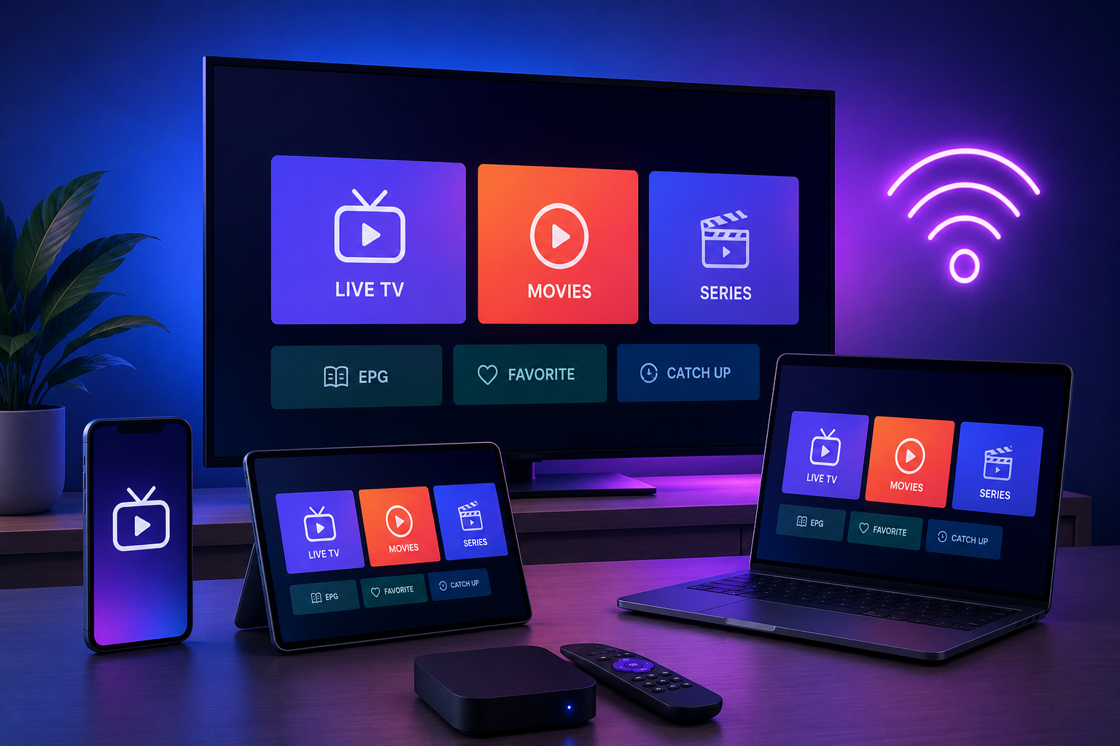
The image below demonstrates the visual difference between a legitimate, licensed IPTV interface versus a typical unlicensed service. Pay attention to the branding, the clarity of channel groupings, and the presence of official logos.
Comparison Table of Available Options
| Provider | Legal Status | Monthly Cost | Channel Count | Key Feature |
|---|---|---|---|---|
| Verified IPTV Pro | Licensed | $24.99 | 12,000+ | 4K HDR + 7-day EPG |
| StreamSafe IPTV | Licensed | $19.99 | 8,500+ | Anti-freeze technology |
| BudgetStream TV | Gray Area | $9.99 | 15,000+ | Cheapest rate / No licensing info |
| IllegalStream XYZ | Unlicensed | $7.50 | 20,000+ | High risk of service kill / No refunds |
Recommendation by Budget and Needs
Based on the safe IPTV subscription criteria above, here is our tailored recommendation:
Pros of Legal IPTV
- Guaranteed service stability and uptime
- Legal protection and no ISP warnings
- Reliable customer support and refunds
- High-quality streams with official licensing
- Regular updates and consistent channel lineup
Cons of Legal IPTV
- Higher monthly cost vs. illegal services
- Limited to specific geographic regions
- May not include niche or obscure channels
- Requires a stable internet connection
- Content can vary by licensing agreements
For budget-conscious viewers: Aim for a tier-1 legal provider costing between $20-$30 per month. This gives you access to major networks, sports, and movies without risk. Avoid services under $10 unless they are established household names like Sling TV or Philo.
For sports fans: You need a service with explicit agreements with ESPN, Fox Sports, NBC Sports, and your local regional sports network (RSN). This typically costs $50-$80 per month but is the only way to watch legally without interruptions.
For international viewers: Look for services that specialize in your region's content and hold licensing agreements with local broadcasters. Where to buy legal IPTV for international channels often involves providers based in that specific country to ensure compliance.
How to Maximize Your Investment
Once you've confirmed is IPTV legal and selected a provider, follow these steps to get the most value:
- Use a dedicated streaming device — A Fire Stick, Apple TV, or Android TV box provides a smoother experience than smart TV apps alone.
- Optimize your internet connection — Wired Ethernet is always better than Wi-Fi. For 4K streaming, ensure you have at least 25 Mbps download speed.
- Explore the EPG (Electronic Program Guide) — Legal services provide accurate, up-to-date programming schedules. Use them to plan your viewing.
- Take advantage of multi-screen options — Most legal providers allow 2-5 simultaneous streams. Share with family to reduce per-person cost.
- Set up a VPN for privacy — While your provider is legal, a VPN adds an extra layer of security and can help with regional content access.
Final Subscription Window:
Main Offer Today →Affiliate Disclosure: Clicking this secure link verified by our network supports our team through standard partnership terms at zero extra cost to your invoice.
Frequently Asked Questions
What is the best way to verify if an IPTV service is legally licensed?
The most reliable method is to check for a public list of content partnerships and licensing agreements on the provider's official website. You can also search for the company name on the U.S. Copyright Office's DMCA agent directory. Legitimate services will have a registered agent. Additionally, look for press releases or news articles confirming their partnerships with major networks like Disney, Warner Bros., or Comcast. If the provider avoids these questions in customer support chats, consider it a red flag.
Can I get in legal trouble for watching an illegal IPTV service in the USA?
Yes, you can. While the primary legal target is the distributor, the U.S. Copyright Act allows content owners to pursue legal action against end-users who knowingly stream copyrighted content without authorization. Penalties can range from $750 to $30,000 per infringed work, and up to $150,000 if the infringement is proven willful. Internet service providers also issue escalating warnings that can result in terminated service. Always verify that is IPTV legal in USA applies to your chosen provider by checking their compliance statements.
How do legal IPTV providers differ from illegal ones in pricing and offerings?
Legal IPTV providers operate on a sustainable business model that includes licensing fees, which typically results in subscriptions costing $20 to $80 per month. They offer a curated, stable channel lineup that matches their licensing agreements. In contrast, illegal services undercut prices drastically (often $5 to $15 per month) and promise thousands of channels they do not have rights to. They frequently experience downtime, disappear suddenly, and offer no customer service. The IPTV legal vs illegal distinction is most visible in price stability and content reliability.
What should I look for in the terms of service to confirm an IPTV is legal?
Read the terms of service carefully for explicit statements about copyright compliance, DMCA notices, and geographic restrictions. A legal provider will specify that you must be located in a particular country or region to access their content. They will also outline the process for submitting copyright infringement claims. Illegal services typically have vague or missing terms of service, or they include disclaimers that attempt to shift liability to the user. This is a critical step for how to find legal IPTV services.
Are IPTV services that sell lifetime subscriptions ever legal and safe?
Almost never. Lifetime subscriptions are a hallmark of illegal IPTV operations because they need to collect a large upfront payment before the service inevitably gets shut down. A legitimate IPTV provider has ongoing operational costs for licensing, bandwidth, and infrastructure, so they rely on recurring monthly or annual subscriptions. If you see a "lifetime" deal, it is almost certainly an illegal operation. For a safe IPTV subscription, always choose a service with transparent billing cycles and avoid any offer that seems too good to be true.
How often do authorities crack down on illegal IPTV providers in 2025?
Crackdowns are accelerating. In 2024 alone, Europol coordinated 108 arrests across Europe related to illegal IPTV operations, and the U.S. Department of Justice has ramped up prosecutions under the Protecting Lawful Streaming Act. The Alliance for Creativity and Entertainment now regularly submits takedown notices to domain registrars and hosting providers. This means illegal services are being shut down at an increasing rate, often without warning. Subscribers lose their entire investment when this happens. This is why research into legal IPTV providers 2025 is essential before committing.
Can using a VPN make an illegal IPTV service legal to use?
No. A VPN does not change the legality of the content you are accessing. It merely hides your IP address. If the IPTV service you are using is distributing copyrighted content without a license, you are still infringing on copyright, regardless of whether you use a VPN. In fact, some courts have considered VPN usage as evidence of willful infringement, which can lead to higher statutory damages. The only safe path is to ensure the service itself is legal, not just to hide your activity. Understanding IPTV legality explained starts with the core principle: the content must be licensed.
What payment methods do legal IPTV services typically accept?
Legitimate IPTV providers accept standard, traceable payment methods: major credit cards (Visa, Mastercard, American Express), PayPal, and sometimes bank transfers through verified processors like Stripe. They provide clear invoices and receipts. Illegal services often insist on cryptocurrency (Bitcoin, Monero), gift cards (Amazon, Google Play), or direct bank transfers to unidentifiable accounts. This is because these methods are difficult to trace and reverse. If a provider only accepts these anonymous methods, it is a major warning sign that where to buy legal IPTV is not from this vendor.