By Mark T. · Updated 2026-06-28 · 12 min read
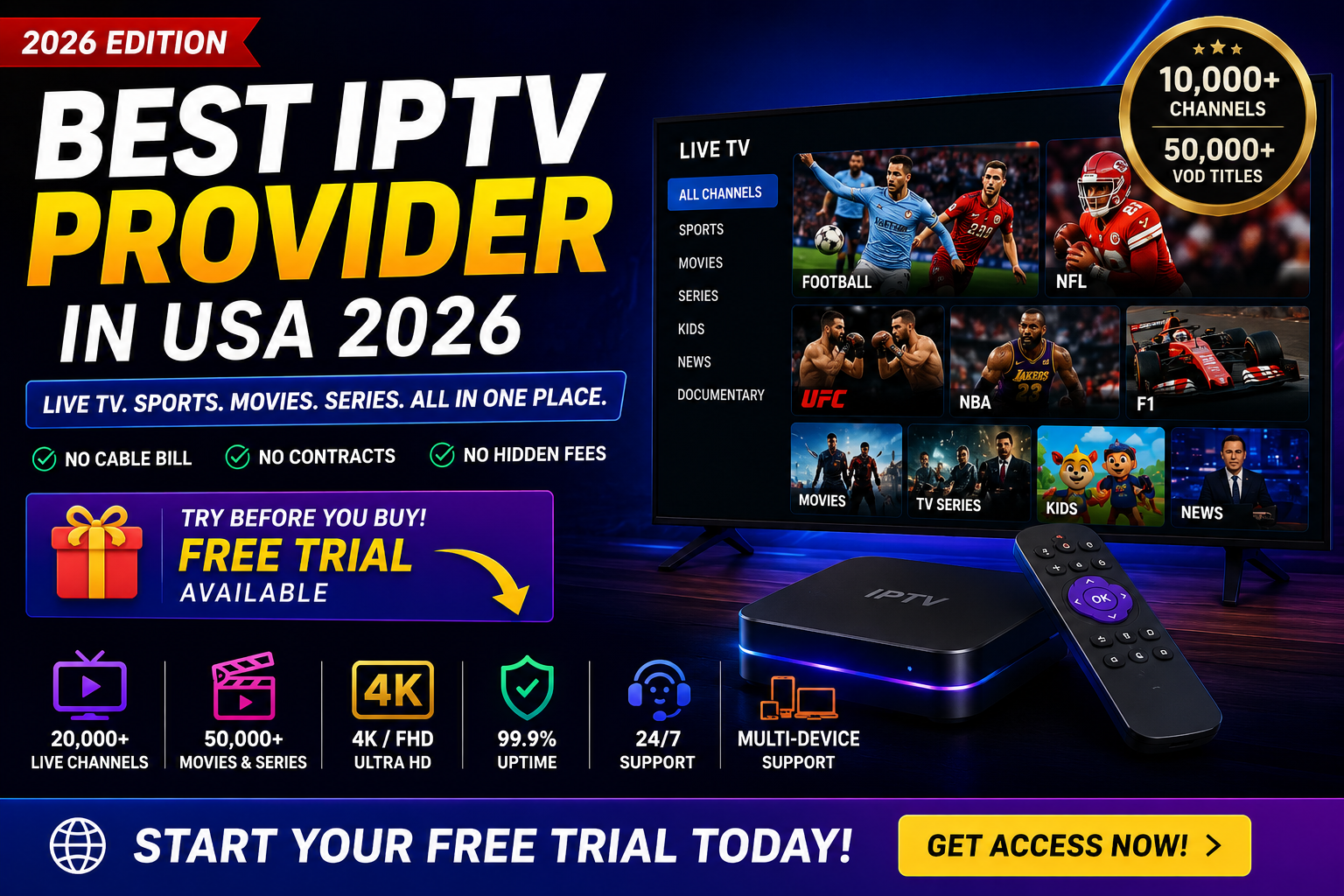
You have probably heard the term "IPTV subscription service" thrown around in conversations about cutting cable or finding better sports coverage. But what does it actually mean, and is it something you should buy? Thousands of people search for "best IPTV subscription service 2025" every month, eager to find a solution that gives them more channels for less money.
The honest answer is that an IPTV subscription service delivers live television channels and on-demand content over the internet rather than through traditional cable or satellite. This guide explains exactly how that works, where the risks lie, and how to choose a reliable provider. You will learn what to look for, what to avoid, and how to get started safely — whether you want the best IPTV for sports channels or a general entertainment package.
What Is an IPTV Subscription Service Exactly?
IPTV stands for Internet Protocol Television. Instead of receiving TV signals through a coaxial cable or satellite dish, your device receives video data packets over your internet connection. Think of it like watching Netflix, but for live television — including sports, news, movies, and international channels.
A legitimate IPTV subscription service provides a curated list of channels hosted on private servers. The provider gives you access credentials and sometimes a dedicated app or a playlist file (M3U) that you load into an IPTV player like TiviMate, IPTV Smarters, or VLC. The service streams in real time, so you can watch Premier League matches, CNN, HBO, or regional content from anywhere in the world, as long as you have a stable internet connection.
Related entities you will encounter include EPG (Electronic Program Guide), which shows the schedule for each channel, and VOD (Video on Demand), which lets you watch movies or series whenever you want. Many providers bundle live channels with a library of on-demand content, making the service feel closer to a full streaming platform than traditional cable.
How It Works Step by Step
Related Reading: How to Get a Free Steam Gift Card - Quick-Start Guide
Understanding the technical flow helps you diagnose problems faster and choose a setup that suits your devices. Here is how a typical IPTV subscription service delivers content to your screen:
- Content acquisition: The provider captures live broadcasts from satellite feeds or other primary sources and encodes them into a digital format (usually H.264 or H.265).
- Streaming server hosting: Encoded streams are uploaded to servers — often in data centers with high bandwidth. The better the server infrastructure, the more stable the stream.
- Playlist generation: The provider creates an M3U playlist or portal URL that maps channel names to streaming URLs. This file is what you load into your IPTV player.
- Player authentication: You enter your credentials (username, password, or a unique URL) into an IPTV app. The app contacts the provider's server to verify your subscription.
- Stream delivery: Once authenticated, the app requests individual channel streams. Data packets travel from the server to your device over the internet. Your player decodes them into video and audio.
- EPG integration: Many providers include an XMLTV file that populates your guide with program names and air times, so you can browse channels like a traditional TV guide.
That is the simplified version. In practice, factors like your internet speed, the provider's server load, and the device you use all affect stream quality. A reliable IPTV subscription service typically recommends at least 25 Mbps for Full HD streams and a wired Ethernet connection for the best results.
Concrete Benefits for Users
Why do millions of people switch to IPTV every year? The advantages over cable or satellite are substantial, especially if you value flexibility and cost savings.
Cost savings: A typical IPTV subscription service costs between $10 and $25 per month, while traditional cable packages often run $80 to $150. Even premium IPTV plans rarely exceed $30 monthly. For sports fans, the difference is even more striking — a single NBA League Pass or NFL Sunday Ticket subscription can cost $100-plus per season, while an IPTV package with those channels might include them at no extra charge.
Channel variety: You can access hundreds or even thousands of channels from dozens of countries. Want to watch Italian Serie A, Japanese anime channels, or British news? A good IPTV subscription service covers all of them in one plan. No need to juggle multiple streaming services.
Device flexibility: Smart TVs, Android boxes, Fire Stick, smartphones, tablets, PCs, and even some routers can run IPTV software. You can watch on one device at a time or, depending on the provider, multiple devices simultaneously. This makes it ideal for households with different viewing preferences.
On-demand libraries: Many services include thousands of movies and TV series updated regularly. You essentially get a live TV service and a Netflix-style library in one subscription. For families, this eliminates the need for separate streaming accounts.
✓ Pros
Significantly cheaper than cable or satellite
Access to global channels and international content
Works on almost any device with an internet connection
VOD libraries included in many plans
No long-term contracts or equipment rental fees
✗ Cons
Legality varies by provider — many operate in gray areas
Stream stability depends on provider's server quality
Requires a stable internet connection (25 Mbps or higher)
Some providers disappear suddenly without refunds
No centralized customer support (varies wildly by provider)
Resource mentioned in this article
iptv subscription service
See current details and pricing
Learn more about iptv subscription service →Honest Limitations You Should Know
Related Reading: IPTV Service Myths: 5 Beliefs That Ruin Your Streaming
Not everything about IPTV is perfect. Being aware of the downsides helps you manage expectations and avoid common complaints that appear in "IPTV subscription service review Reddit" threads.
Legal gray area: While IPTV technology itself is legal, many providers stream content without proper licensing from broadcasters. If a provider offers premium sports channels, HBO, or mainstream movie channels for an unrealistically low price, they likely lack rights. Using such services could expose you to legal risk depending on your country, though prosecutions against end users are rare. A legal IPTV subscription service holds proper licenses, like those from Verizon or Hulu + Live TV, but they cost closer to traditional cable.
Stream reliability: Even the best IPTV for sports channels can buffer during high-traffic events like the Champions League final or a UFC pay-per-view. Server overload, ISP throttling, or poor routing all affect quality. You need a provider with multiple server locations and redundancy. Trial periods are essential to test stability before committing.
Setup complexity: Unlike plug-and-play cable boxes, IPTV often requires you to configure apps, enter URLs, and troubleshoot playback issues. Less tech-savvy users may find the initial setup frustrating. Many providers offer installation guides, but you still need basic familiarity with app stores and network settings.
Provider longevity: The IPTV landscape changes fast. Providers get shut down, rebrand, or simply disappear with your payment. That is why paying monthly rather than annually is safer, and why you should stick with established services that have verifiable track records.
Comparison with Alternatives
How does an IPTV subscription service stack up against traditional cable, satellite, and mainstream streaming platforms? The table below breaks down the key differences.
| Criteria | IPTV Subscription | Cable TV | Streaming (Netflix, Hulu) |
|---|---|---|---|
| Monthly cost | $10–$25 | $80–$150 | $15–$40 per service |
| Live sports channels | ✓ Wide selection | ✓ Good selection | Limited |
| On-demand content | Varies by provider | Limited | ✓ Extensive library |
| Contracts | ✓ None typically | Often 1–2 years | ✓ None |
| Device support | ✓ Almost any device | Proprietary box only | Smart devices |
| Setup difficulty | Moderate | ✓ Easy | ✓ Easy |
| Legal certainty | Variable | ✓ Fully licensed | ✓ Fully licensed |
As the table shows, IPTV excels in cost and channel variety but falls short on legal clarity and ease of use. If you prioritize simplicity and zero legal risk, cable or a big streaming service may be better. But if you want maximum value and are willing to do a bit of research, an IPTV subscription service is hard to beat.
Who It Is For — User Profiles
Related Reading: How to Get Free V Bucks - A Step-by-Step Guide
An IPTV subscription service suits specific types of viewers better than others. Here are the profiles that benefit most:
The sports fanatic: You want every Premier League, La Liga, Serie A, and Champions League match without paying for multiple sports packages. A good IPTV provider bundles dozens of sports channels from different countries, often including pay-per-view events. The best IPTV for sports channels delivers these at a fraction of the cost of official broadcast rights packages.
The international viewer: You live abroad and miss programming from your home country. IPTV gives you access to hundreds of international channels — Indian, Filipino, Arabic, Latin American, European — that are otherwise expensive or unavailable through local providers.
The cord-cutter on a budget: You have already canceled cable but miss live TV. You do not want to pay $70 for Sling TV or YouTube TV. An affordable IPTV subscription plan gives you similar or better coverage for $10–$20 per month.
The tech enthusiast: You enjoy tinkering with apps, customizing playlists, and optimizing your setup. IPTV appeals to your sense of control. You can add your own EPG, rearrange channels, and integrate services like Plex or Emby.

How to Get Started — Practical Numbered Steps
Ready to try an IPTV subscription service? Follow these steps to set up safely and avoid common pitfalls.
- Research providers thoroughly. Read reviews on Reddit, Trustpilot, and dedicated forums. Look for consistent positive feedback about uptime, channel availability, and customer support. Avoid providers with zero online presence or overly aggressive marketing.
- Choose a trial or monthly plan first. Never buy an annual subscription upfront. Reputable providers offer free trials (24 to 72 hours) or low-cost monthly plans. Use the trial to test buffering, channel selection, and EPG accuracy during peak hours.
- Set up your device. Install an IPTV player app. Popular options include TiviMate (Android TV), IPTV Smarters (multiplatform), GSE Smart IPTV (iOS/Android), and VLC Media Player (PC). For Fire Stick, enable "Apps from Unknown Sources" in settings first.
- Configure the player with provider details. Your provider will send you an M3U link, Xtream Codes API, or portal URL. Enter this in the app along with your username and password. The player will download the channel list automatically.
- Load the EPG. Many providers give you an EPG link. Add it in your player's settings to populate the program guide. Without this, you will see only channel names and no schedule information.
- Test your connection. Check your internet speed at fast.com. For Full HD streaming, aim for at least 25 Mbps. Wired Ethernet is more stable than Wi-Fi. If you experience buffering, try connecting via VPN — some ISPs throttle IPTV traffic.
- Start watching and adjust. Browse channels, mark favorites, and explore the VOD section. If certain channels do not load, contact support or check online forums for known issues. Most problems resolve with a server switch or player update.
Following these steps will help you find a reliable IPTV subscription service and avoid wasted money on poor-quality providers.
Full information available here
Explore iptv subscription service →
Conclusion
An IPTV subscription service offers an unmatched combination of channel variety and affordability compared to traditional cable or satellite. It gives sports fans access to live matches from around the world, helps expats stay connected to home-country programming, and lets budget-conscious cord-cutters enjoy hundreds of channels for a fraction of the usual cost.
That said, the experience depends heavily on your provider's reliability and your own comfort with technology. Stick with services that offer trials, read recent reviews, and avoid committing to long-term payments until you are satisfied. A legal IPTV subscription provider is always the safest choice, though they come at a higher price point.
If you are ready to explore your options, start with a free trial to see how the service performs on your setup. Use the steps above to get from zero to streaming in under fifteen minutes. The right provider can transform how you watch television — without breaking your monthly budget.
Option featured in this guide:
Find out more about iptv subscription serviceAffiliate link — our editorial analysis remains independent.